
Yann Allegre, Val d’Isère Tourism, Winter 2025–2026, 2mo 16
©

Yann Allegre, Val d’Isère Tourism, Winter 2025–2026, 2mo 16

|

Yann ALLEGRE

Our commitments Ski resort  and sustainable development

Find out how we are committed to a comprehensive approach to sustainable development through the many initiatives we have implemented and continue to roll out: the environmental observatory, electric urban transport, green energy…

Having been the largest interconnected ski area to be awarded the Green Globe label in 2016, Val d’Isère is committed to a comprehensive approach to sustainable development shared by all stakeholders in the resort.

Green Snowflake logo
©

Green Snowflake logo

Tignes – Val d’Isère A ‘green snowflake’ area

Tignes and Val d’Isère were awarded the Flocon Vert label on 25 November 2022 as part of the International Mountain Professions Festival held in Chambéry. This certification of the region by the Mountain Riders association is the result of a thorough audit, recognising the two municipalities’ commitment to their unique environment and their comprehensive approach to sustainable development.

This label is based on best practice in environmental, social and economic transition. It is awarded on the basis of compliance with 20 criteria relating to sustainable development, including, for example, support for local initiatives, soft mobility, recycling, energy management and respect for biodiversity. Val d’Isère is committed to the areas of soft mobility and transport, energy and the transition, and sustainable initiatives, notably through its association Vie Val d’Is.
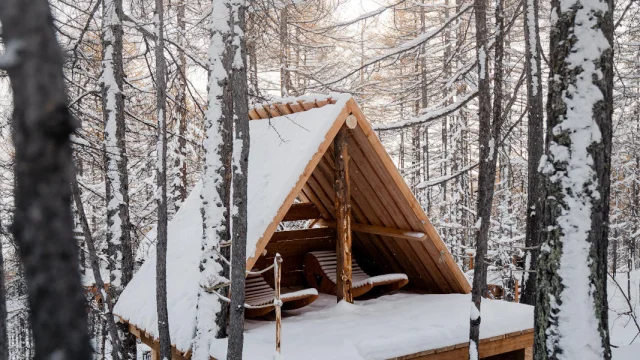
The Lost Village A journey into the forest

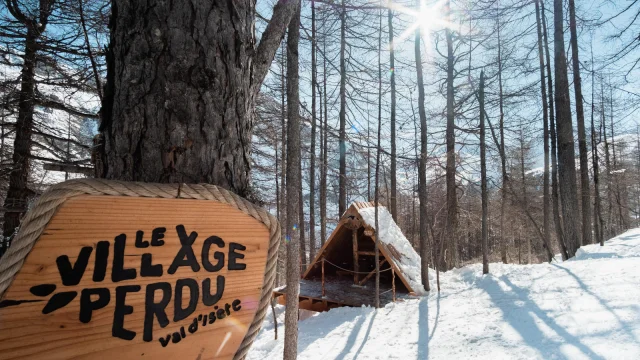
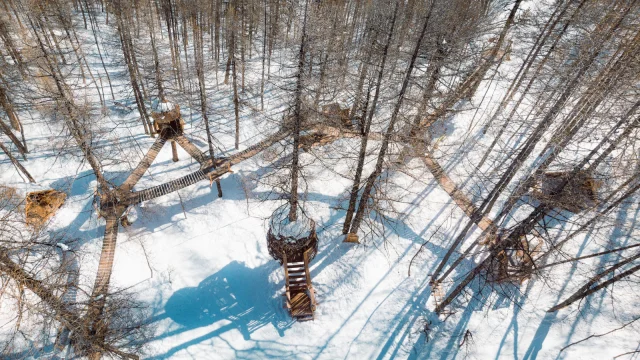
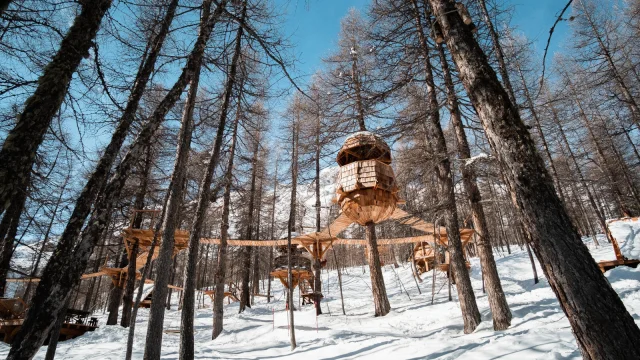
Opened in December 2021, ‘Le Village Perdu’ is a free outdoor play and relaxation area situated at an altitude of 2,000 metres, in the heart of the larch forest of Les Etroits. In both winter and summer, you can wander amongst the trees along suspended walkways, leading from treehouse to treehouse towards the eagle’s nest. The site has been designed with sustainability in mind, in consultation with and with the support of the National Forestry Office and the Régie des Pistes, without clearing or levelling the ground, using larch as the sole building material (sourced from the Alps; this ensures the long-term durability of the facilities).

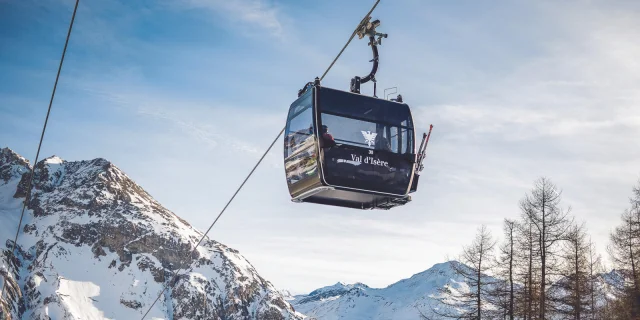
The La Daille cable car

It optimises the flow of skiers in this area: thanks to a capacity of 2,500 people per hour for the gondola lift alone, the chairlifts and T-bar lifts that previously served this part of the ski area have been removed. This has resulted in a reduction in the number of pylons – 40 fewer – giving the La Daille sector a more natural appearance.

Damage to the HVO

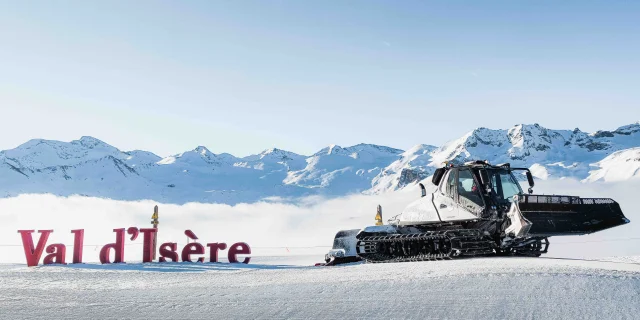
The 19 snow groomers operated by our Régie des Pistes and the 12 snow groomers operated by Val d’Isère Téléphériques have switched to HVO biofuel in line with the Compagnie des Alpes’ commitments. Derived entirely from renewable sources and produced from waste vegetable oils and fats – and free from palm oil – this diesel substitute reduces CO₂ emissions by 90 per cent and fine particulate matter emissions by 65 per cent.

Urban transport continues to evolve

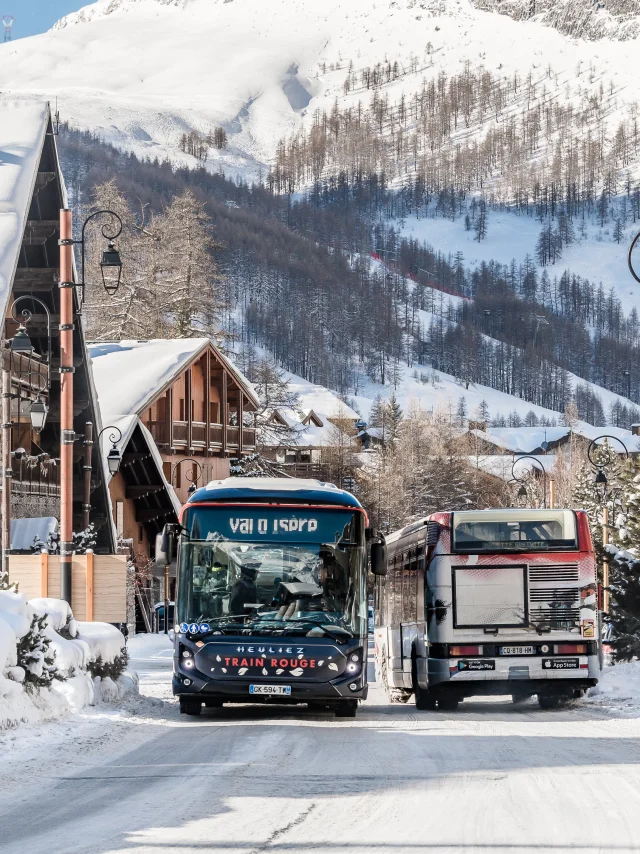
Electric shuttle buses

The start of the 2022–2023 winter season marks the arrival of two electric shuttles, IVECO models manufactured in France. They represent the first stage in the renewal of the ValBus fleet, following a trial carried out in December 2021. This development will reduce greenhouse gas emissions from the free shuttle service by 90 per cent. This decision is part of the Compagnie des Alpes’ strategy – of which Val d’Isère Téléphériques is a subsidiary – to achieve net-zero carbon by 2030.

For the 2025–2026 winter season, five new electric shuttles will join the fleet, continuing the transition begun in recent years. With these new additions, the entire fleet will become 100 per cent electric, marking a major milestone in the decarbonisation of urban transport in Val d’Isère.

A more environmentally friendly fuel

A first step was taken in 2019 with the Valbus fleet’s switch to GTL (Gas-To-Liquids), which reduced greenhouse gas emissions by 20 per cent. The rest of the shuttle fleet is switching to the synthetic biofuel HVO (hydrotreated vegetable oil produced from waste, which reduces CO₂ emissions by 90 per cent and fine particulate matter by 65 per cent).

Involving skiers as part of our commitment to environmental responsibility

The pylons of the Marmottes chairlift, in the Bellevarde area, are being used to raise awareness of environmental responsibility. Ten banners have been put up in the form of a quiz to encourage people to reflect on their own impact on the environment. We learn that it takes two years for a cigarette butt to break down in the natural environment, 200 to 500 years for a drinks can, and some 4,000 years for a glass bottle.

The network of artificial snow

With one of the most efficient snow-making facilities in Europe, significant investment is being made in Val d’Isère’s snow network. The snow-making system on the OK run was completely replaced in autumn 2019 at a cost of 1.5 million euros. The aim is to reduce the air-to-water ratio so that the new snow guns can produce more snow in less time. State-of-the-art snow guns now use half as much water to produce twice as much snow as they did 20 years ago.

Green energy

Since 2012, Val d’Isère Téléphériques has had a green electricity contract with its energy supplier to power the ski lifts and snow-making equipment.

208: this is the number of solar panels installed on the façade (82, in 2021) and the roof (126, in 2022) of the L’Olympique cable car’s top station. This covers an area of 156m² on the façade and 246m² on the roof.

The Environment Observatory

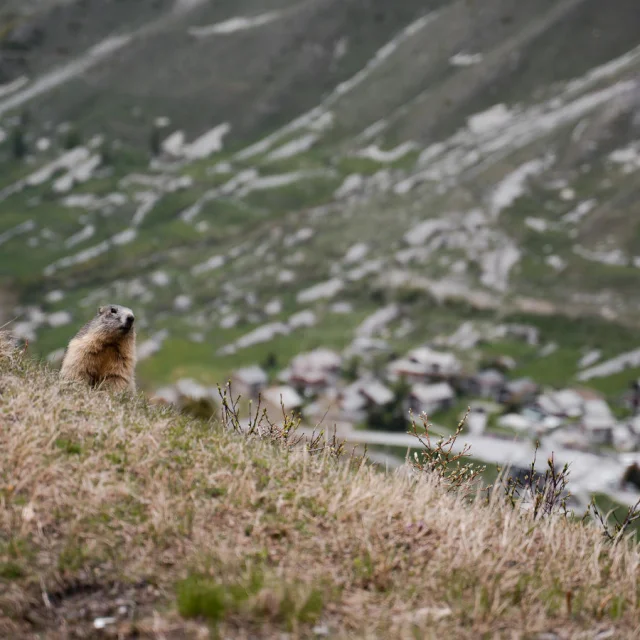
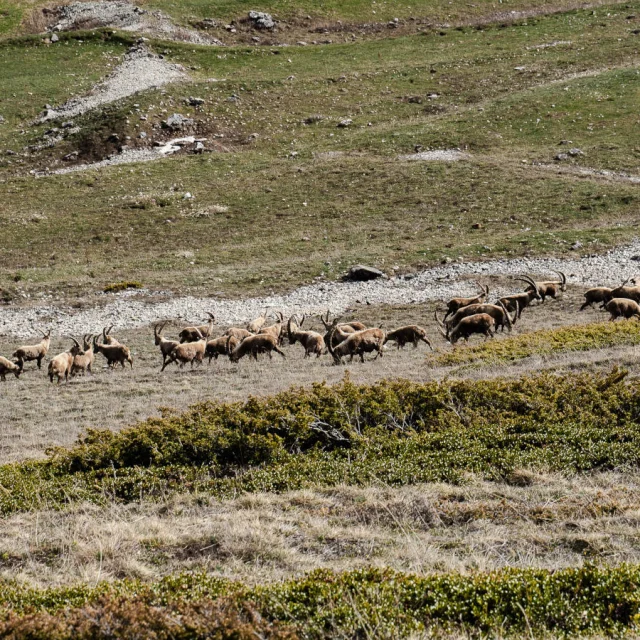
Since 2014, Val d’Isère Téléphériques has run aprogramme to monitor flora and fauna across the ski area, demonstrating the company’s commitment to preserving sensitive habitats, protected species and ensuring that projects and infrastructure are integrated into the environment. Ecologists patrol the ski area to identify all the species present and the areas requiring protection.

Since 2016, in partnership with the Vanoise National Park, the Régie des Pistes and Val d’Isère Town Council, Val d’Isère Téléphériques has been helping to protect the black grouse by continuing to establish protected areas in off-piste sectors such as the Cairn forest, the Cognon woods and the Virage des Gardes.

Capercaillie census

As part of the partnership agreement to protect the willow grouse in the Val d’Isère ski area between the Vanoise National Park, Val d’Isère, its ski management company and Val d’Isère Téléphériques, around fifteen people took part in the black grouse count on 3 May 2023. This very encouraging initiative resulted in the sighting of 34 cocks and 5 hens (the highest count since the scheme began in 2005).

Practical measures

Here are two examples of practical initiatives undertaken by the Val d’Isère Téléphériques Environmental Observatory:

1. Quantifying the recolonisation of the Swedish silene following work on the Solaise gondola lift. Result: a few years later, there are just as many Swedish silenes as before.

2. Every year, a landscape architect from Karum visits Val d’Isère to carry out a monitoring exercise and assess which areas of the ski area are suitable for re-turfing (such as Datcha in the summer of 2021).

Discover Our commitments Initiatives led in Val d’Isère


Every day, these commitments are brought to life through concrete actions carried out across the destination.