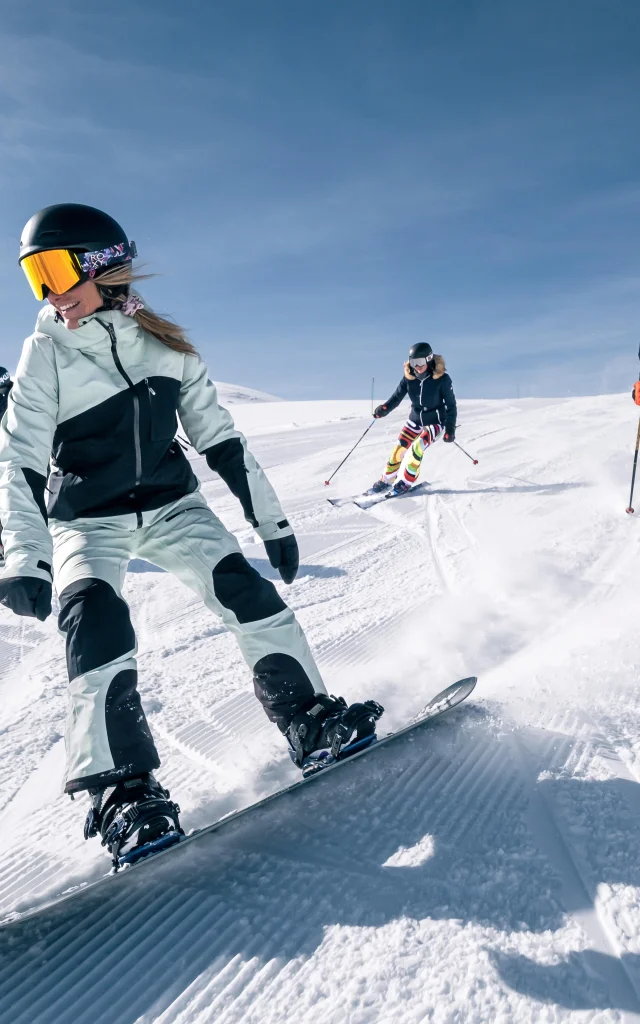
Off-piste skier in Val d'Isère
©

Off-piste skier in Val d'Isère

|

Elias Ejderhamn

Off-piste skiing #2 Understanding the dangers

Off-piste skiing is a rare experience, characterised by freedom, commitment and precision. It is an intense pleasure that must be approached with a methodical approach, humility and respect for the mountains. Before setting off down an untouched slope, there are a few basics to bear in mind to ensure you ski safely and make the most of the adventure.

Once you’ve sorted out your kit and mastered the correct techniques, it’s time to focus on the essentials: understanding what’s happening beneath your skis.

How does it start? An avalanche?

What is an avalanche?

An avalanche is a mass of snow and ice that suddenly breaks away from a mountainside and hurtles down the slope at high speed. It is accompanied by a powerful surge of air – the avalanche blast – capable of sweeping away everything in its path.

As it travels, it can carry snow, ice, rocks, earth, vegetation and debris.

It can be triggered:

    • naturally (snowfall, wind, a thaw, rain, etc.)
    • or be triggered deliberately (by a skier passing through, a cornice breaking, etc.)

When skiing off-piste, accidental triggering by humans is one of the most common causes.

To assess the level of danger, a common European scale has been introduced:

    1. low
    1. limited
    1. marked
    1. high
    1. very high

Key point: level 3 is not a ‘moderate risk’, but already a level at which many accidents occur. This scale provides an overall indication for a mountain range, but it is never a substitute for on-site analysis.

Trigger factors

An avalanche is always linked to an imbalance in the snowpack. Three main factors come into play, and it is the combination of these elements that creates the risk.

(Re)Discover the triggering factors and the 3×3 method in Off-Piste Skiing #1.

The different types avalanches

Not all avalanches are the same. Their behaviour depends on the type of snow present.

    • Fresh snow avalanches
      These occur during or immediately after snowfall. The snow has little cohesion, is light, and can be set off spontaneously or under minimal stress. The risk of an avalanche occurring can persist for several days.
    • Slab avalanches (the most feared)
      They are based on an invisible trap: a hard surface layer resting on a fragile layer. When a skier passes over it, the fracture spreads rapidly down the entire slope. These are the most common avalanches when skiing off-piste.
    • Wet snow or slush avalanches
      These occur during thaws or when it rains. The snow becomes heavy, dense and unstable. Typical of spring or sunny slopes, they are often slow-moving but very powerful.
    • Snow slides
      Smaller in scale, they may seem harmless… but are enough to knock a skier off balance and sweep them into an exposed area.

The Avalanche Risk Assessment Bulletin Check your compass before setting off

Before every outing, there is one key source of information: the Avalanche Risk Forecast Bulletin (BERA).

Produced daily by Météo-France, it summarises:

    • weather conditions
    • the condition of the snowpack
    • the level of avalanche risk

It is published daily at 4 pm for the following day and is available free of charge (on the Météo-France website and apps, at the Tourist Office and at rescue stations).

The BERA is divided into three sections:

    1. Risk summary: a rating from 1 to 5 and the most exposed aspects.
    1. Snowpack stability (interpretation guide): possible types of avalanches, locations, probability of triggering, etc. This is the most valuable section for preparing your outing.
    1. Snow quality and weather forecast

The BERA does not provide a ready-made answer: it offers guidance to help you make a decision.

The reality on the ground Snow in motion

The weather forecast

The weather report is an essential tool for anticipating the behaviour of the snowpack. It enables you to identify the causes of avalanche risk and understand its dynamics. The key is not just to know what the weather is like, but how the snow will change over the coming hours.

Key factors to monitor:

    • Temperatures: a thaw weakens the snow, whilst a drop in temperature can stabilise certain layers
    • Wind: it transports snow and creates unstable accumulations (wind slabs)
    • Precipitation: the amount, intensity and type of snow directly influence the snowpack’s load
    • Sun exposure: this rapidly transforms the snow, particularly on exposed slopes

The weather report differs from the BERA, yet the two are inextricably linked:

    • the weather forecast explains the conditions (what is falling, what is blowing, what is warming)
    • the BERA interprets these conditions to assess avalanche risk

The right approach: check the weather forecast the day before and again on the day itself, and cross-reference it with the BERA to form a coherent picture.

The ski patrol’s snow report

To supplement the forecasts, ski patrol officers play a key role thanks to the snow surveys they carry out every day in the field. Snow science is the study of snow: its formation, composition, stability and the evolution of the snowpack, as well as the risk of avalanches, whether spontaneous or triggered by skiers.

In Val d’Isère, the ski patrollers, in collaboration with the Régie des Pistes, directly observe the snowpack to gain a more detailed understanding of the risk at a local level. Their work involves, in particular, analysing:

    • the structure of the snow layers
    • cohesion and areas of weakness
    • the effects of wind and snow accumulation
    • signs of instability (cracks, recent avalanches, etc.)

These field observations are then forwarded to Météo-France at the Bourg-Saint-Maurice station, where they are cross-referenced with other meteorological and snow data from the mountain range.

Objective: to refine the BERA and establish a reliable estimate of avalanche risk across the Haute-Tarentaise region.

Whilst the weather forecast provides a preview and the BERA summarises the situation, the ski patrollers contribute essential information: the actual conditions on the ground, as close as possible to the conditions you will encounter.

It is this chain of information – terrain, analysis, forecast – that enables you to better understand what is happening beneath your skis and to adapt your decisions in the mountains.

Every year, people lose their lives in avalanches in the mountains. When skiing off-piste, knowing when to turn back when conditions require it is also part of the sport.

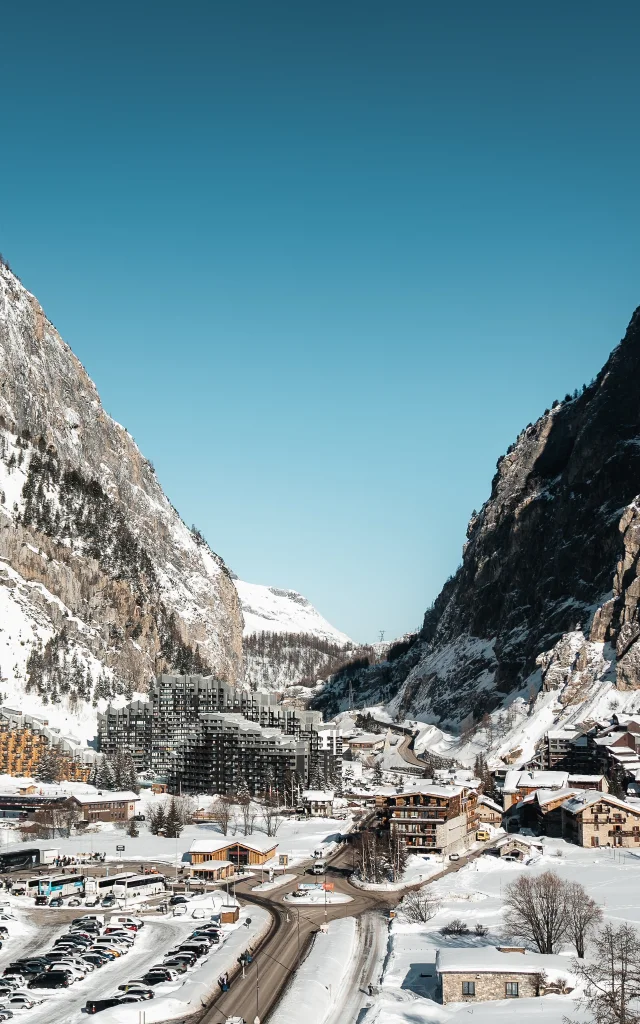
Discover the village of Val d'Isère in winter

Val d’Isère is committed to preserving its authentic, pioneering spirit and offering you a genuine mountain experience.