
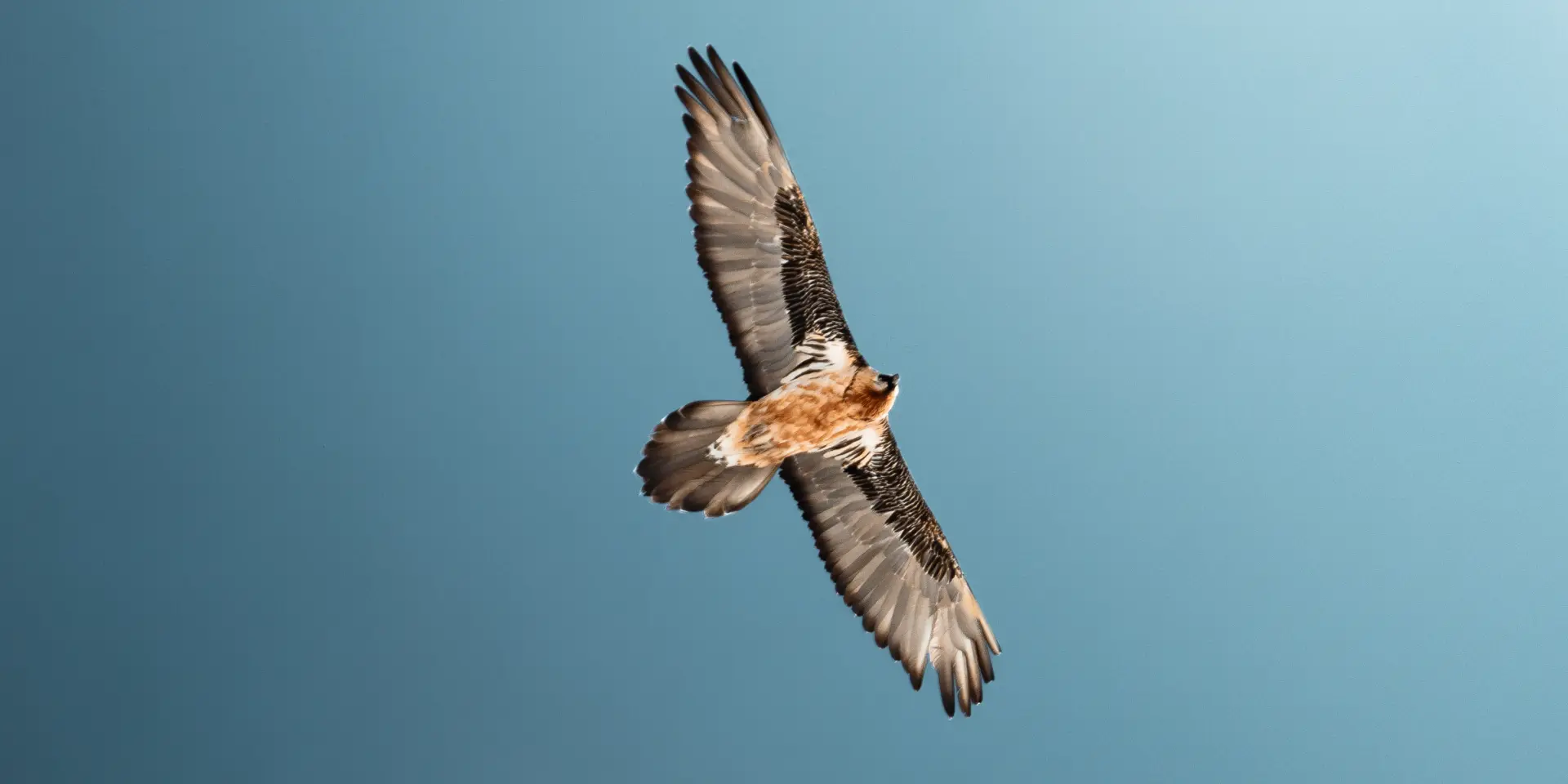
Contrary to popular belief, the bearded vulture is not a predator but a specialised scavenger; it feeds almost exclusively on the bones of animals that have died of natural causes or been killed by predators. Before eating the bones it cracks them by dropping them from the sky, a technique employed by no other creature.
The bearded vulture is a rare and protected species. After disappearing from the Alps for a long time, it has made a remarkable comeback thanks to various reintroduction programmes and to the vigilance of an entire community. Nowadays, Val d’Isère is one of the mountainous regions where its presence is the most regular and enduring.
The first regular sightings of bearded vultures in Val d’Isère were in the early 1990s. The rock faces and natural resources of this region quickly proved to be the ideal habitat, especially with the tranquility that reigns here.
Between 1990 and 1997, they began to nest in eyries left by eagles. In 1995, an emblematic female, named Marie-Antoinette, was identified by her red ring. A major breakthrough was made in 2002 when, for the first time ever, a young bearded vulture born in the Savoie wilderness flew the nest. Freeride, as it was named, made history.
Since the bearded vulture returned to Val d’Isère, 20 hatchings have been recorded in the municipality and 16 chicks have successfully reached fledging stage, several of them in the Daille gorges. A powerful sign that makes Val d’Isère a key territory for the conservation of the species in the French Alps.
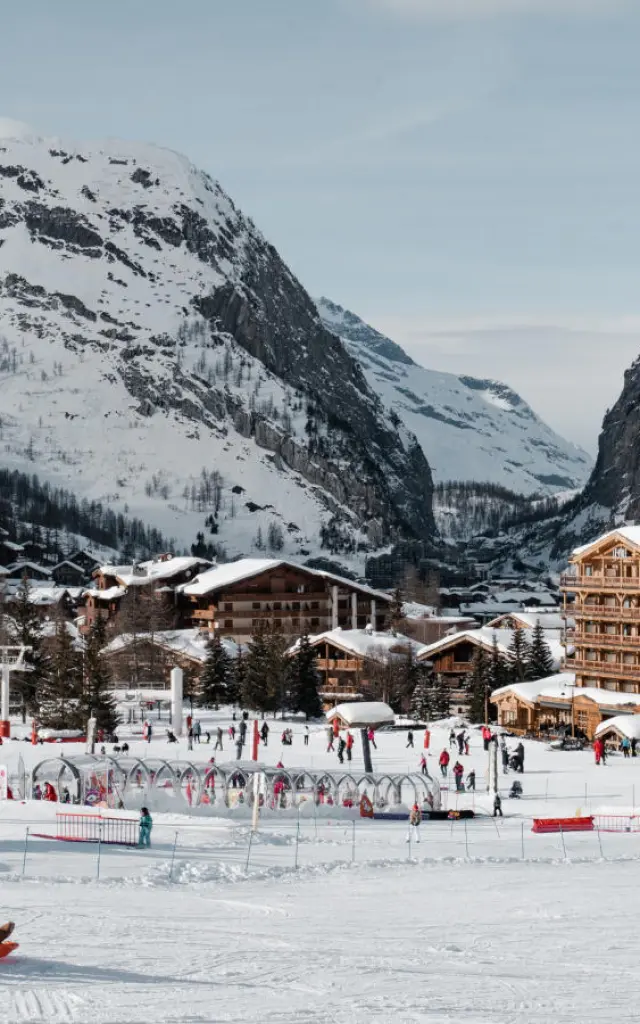
In Val d’Isère, you can observe the bearded vulture without walking for hours on end or carrying special equipment. In favourable weather conditions, it can be seen almost daily in winter, soaring above the village or the south-facing mountainsides. In summer, this bird of prey remains present here but becomes more elusive, living higher up and concealed among the rocks.
Recommended walks:
Sightings are likely if you can be patient, keep quiet… and look closely!
In Val d’Isère, the mountains are not only a fabulous playground but also a place to learn.
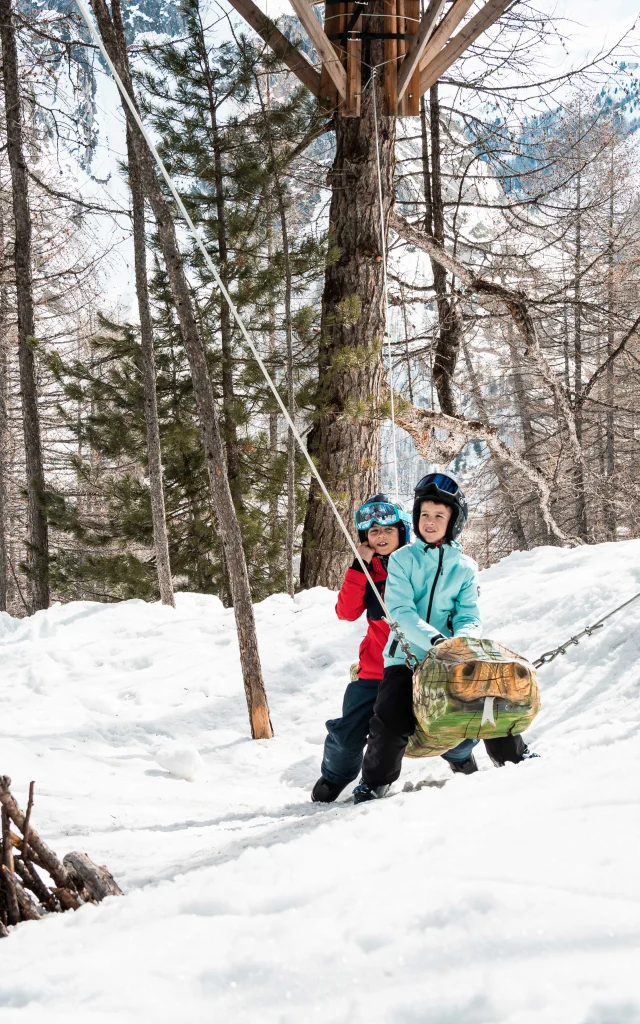
To familiarise young children with this giant of the skies, take them down the “La Verte” slope in the Bellevarde sector, where the “Bearded vulture trail” remains open all winter. The descent features four educational modules built of larchwood, inviting young and old to find out more about this bird, the role it plays here and its habitat. A fun and concrete approach to cultivating respect for the living world.

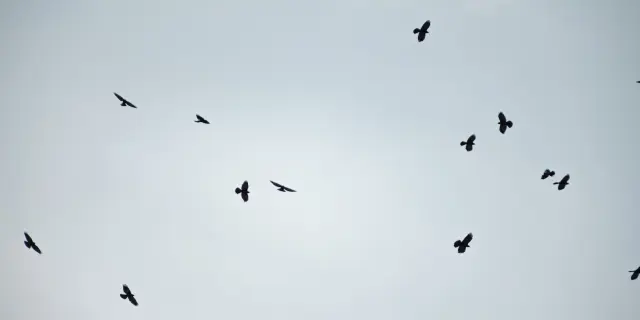
Recent observations have brought excellent news: a bearded vulture chick hatched in early March 2026 in the nest located in the gorges of La Daille. A precious birth for this still fragile species in the Alps, and a very positive sign for the Val d’Isère area.
This new milestone is part of a broader encouraging trend across Savoie. Following a successful 2025 breeding season, with 7 young vultures taking flight, the 11 breeding pairs are continuing their cycle under favourable conditions.
During its first weeks of life, however, the chick remains extremely vulnerable. Entirely dependent on its parents and the tranquillity of its environment, it requires heightened vigilance. Any disturbance near the nest could compromise its development.
As one of the most vulnerable protected species to disturbance, the bearded vulture requires absolute tranquillity throughout its reproduction period.
For this reason, the region’s 19 Major Sensitivity Zones (MSZ) were reactivated for this species in early November 2025.
In these zones, it is forbidden to partake in any activity that may disturb the bearded vultures, including:
By observing these rules, we can increase the bearded vultures’ chances of successfully reproducing… and make a tangible contribution to the preservation of mountain biodiversity.

Major Sensitivity Zone rules vary through the season:
Thanks to GPS monitoring, we can track the fabulous journeys already undertaken by some of the juvenile bearded vultures hatched in recent years:
In Val d’Isère, the mountains offer a sense of freedom… but demand responsible behaviour in return. By observing the Major Sensitivity Zone rules, we can each contribute to preserving the balance of life, in the great outdoors where sports activities and adventures can coexist in harmony with local biodiversity.
Thank you, each and every one of you, for your commitment in helping us take care of the bearded vultures that watch over the expanse of the alpine wilderness, symbolising life itself in these challenging but deeply inspiring mountains.
If you agree that holidays are made for sharing, enjoying yourself and making new discoveries, take inspiration from us! May your craziest wishes come true!